Aleana Font: A Review for Brands Seeking Handwritten Charm
I was staring at a blank brand board for a new boutique skincare line, the concept pinned on “gentle, botanical, and personal.” The mood board was full of soft textures and organic shapes, but the typography space was empty. I knew a standard sans serif wouldn't capture the handmade, artisanal feel the client wanted. That’s when I dragged the Aleana font file into my design software and typed out the brand name. The transformation was immediate.
The First Impression: Romantic & Versatile Character
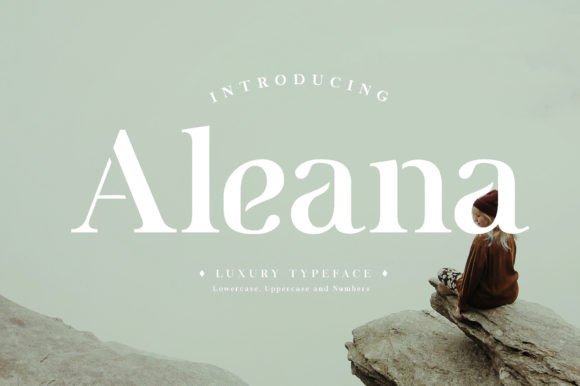
Aleana is an enchanting handwritten script font, but its magic lies in its versatility. It doesn't scream “calligraphy” in an overly formal way; instead, it feels like a confident, personal signature. The letters have a gentle, flowing rhythm with subtle variations in stroke weight that mimic natural handwriting. Its overall personality is undeniably romantic, evoking feelings of intimacy, care, and creativity. This isn't a font for shouting; it’s for whispering a brand’s story.
In my initial tests, Aleana proved it wasn't a one-trick pony. On the logo draft, the client’s two-word name connected beautifully, with elegant ligatures softening the transition between letters. On the brand board, it held its own as the primary display typeface, setting the tone for all other elements. For packaging mockups—both for a serum bottle label and a box—Aleana added that crucial handmade touch, making the product feel special before it was even opened.
Performance in Real Branding Applications
Putting a font through real-world scenarios is the only way to judge it. Here’s how Aleana performed across common design assets.
Logo Design & Identity Systems
For the skincare logo, Aleana worked perfectly as a standalone logotype. Its inherent charm carried the entire identity. For a more complex system, say for a café, I paired Aleana with a sturdy, clean sans serif (like a geometric sans) for the supporting text. Aleana became the accent, used for the café name on the sign and menu headers, while the sans handled descriptions and prices. This created a clear, engaging hierarchy.
Print & Packaging Materials
On a business card, Aleana for the name and title looked professional yet approachable. On a product label, even at a moderately small size, it maintained readability while contributing massively to the brand’s “crafted” perception. It’s important to note: for very small text, like lengthy legal disclaimers on packaging, you should absolutely switch to a simpler typeface. Aleana is a display font, best for headlines, names, and short, impactful phrases.
Digital Presence: Web & Social Media
In website headers, Aleana brought a warm, human element to the digital space, making the homepage feel less corporate. For social media graphics, especially Instagram posts announcing new products or sharing brand values, Aleana in the captions or as graphic text significantly boosted visual engagement. It feels native to platforms built on personal connection.
Where Aleana Shines & Where to Be Cautious
Aleana’s wide spectrum of applications is real, but a good designer knows its limits.
Best Uses for Aleana:
- Logo design for brands in beauty, wellness, handmade goods, food & beverage, creative services, and wedding industries.
- Packaging and product labels where a personal, luxurious, or romantic feel is desired.
- Headlines on websites, brochures, and editorial designs for magazines or blogs with a lifestyle focus.
- Social media graphics, quote overlays, and promotional material aiming for high visual engagement.
- Short phrases on merchandise like totes or mugs for boutique shops.
Projects to Avoid or Use with Care:
- Long body text in books, lengthy reports, or dense website paragraphs. Its handwritten style can hinder readability at small sizes and in large blocks.
- Highly formal corporate branding for law firms, financial institutions, or tech hardware. Its romantic personality would likely clash.
- Any context where ultra-clear, universal readability is the sole priority, such wayfinding signage or critical instructions.
Practical Testing & Pairing Advice
Before committing Aleana to a final client project, test it exhaustively. Create mockups for the actual applications: see how it looks on a dark background, on a textured image, and at the exact sizes you’ll use. Check if the included glyphs support your needed characters (many modern scripts include multilingual support, but always verify).
Font pairing is key. Aleana, being a script, needs a strong supporting cast.
- With Serifs: A classic, low-contrast serif (like a modern Garamond style) can ground Aleana beautifully for editorial layouts.
- With Sans Serifs: A simple, geometric sans serif (think fonts like Montserrat or Poppins) provides clean contrast for logos and web design, letting Aleana be the decorative star.
- Other Scripts/Handwritten Fonts: Generally avoid pairing Aleana with another script. Let it be the sole handwritten voice in your typography system.
A Note on Licensing & Final Thoughts
Always review the commercial license for any font, including Aleana. Understand its usage limits for client work, templates, merchandise, and print-on-demand products. A premium font is an investment in your brand’s visual language, so ensuring proper licensing protects both you and your client.
Aleana delivered on its promise for that skincare brand. It transformed a mood board concept into a tangible, emotional identity. It’s a font that doesn’t just sit on the screen; it interacts with the brand’s story. For designers seeking a versatile, handwritten tool that balances romantic charm with practical application, Aleana is a compelling choice. It reminds us that in a digital world, the human touch of a beautiful script still holds immense power.